Over the past three days of the 𝗜𝗔𝗥𝗖@𝟲𝟬 Conference in Lyon, discussions highlighted how central high‑quality cancer data are to “𝙩𝙪𝙧𝙣𝙞𝙣𝙜 𝙘𝙖𝙣𝙘𝙚𝙧 𝙧𝙚𝙨𝙚𝙖𝙧𝙘𝙝 𝙞𝙣𝙩𝙤 𝙖𝙘𝙩𝙞𝙤𝙣”. From discovery and innovation, to implementation, to the science–policy interface and evidence‑based policy‑making grounded in independent science.
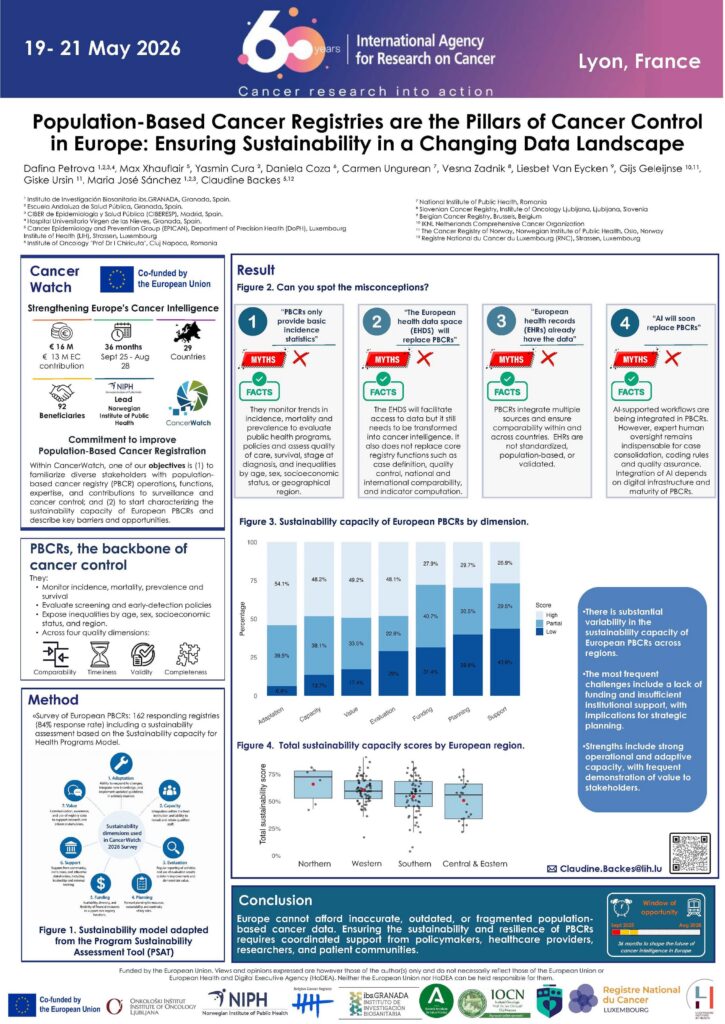
In this context, the CancerWatch JA poster “𝙋𝙤𝙥𝙪𝙡𝙖𝙩𝙞𝙤𝙣-𝘽𝙖𝙨𝙚𝙙 𝘾𝙖𝙣𝙘𝙚𝙧 𝙍𝙚𝙜𝙞𝙨𝙩𝙧𝙞𝙚𝙨 𝙖𝙧𝙚 𝙩𝙝𝙚 𝙋𝙞𝙡𝙡𝙖𝙧𝙨 𝙤𝙛 𝘾𝙖𝙣𝙘𝙚𝙧 𝘾𝙤𝙣𝙩𝙧𝙤𝙡 𝙞𝙣 𝙀𝙪𝙧𝙤𝙥𝙚: 𝙀𝙣𝙨𝙪𝙧𝙞𝙣𝙜 𝙎𝙪𝙨𝙩𝙖𝙞𝙣𝙖𝙗𝙞𝙡𝙞𝙩𝙮 𝙞𝙣 𝙖 𝘾𝙝𝙖𝙣𝙜𝙞𝙣𝙜 𝘿𝙖𝙩𝙖 𝙇𝙖𝙣𝙙𝙨𝙘𝙖𝙥𝙚” was presented by Dafina Petrova, Max X., Yasmin Cura, Daniela Coza, Carmen Ungurean, Vesna Zadnik, Elizabeth Van Eycken, Gijs Geleijnse, Giske Ursin, Maria Jose Sanchez Perez, and Claudine Backes.
The work highlights that:
These preliminary findings reinforce the central role of population‑based cancer registries in providing reliable, timely and comparable data to inform independent, evidence‑based policies and to document and address inequalities in cancer burden and outcomes across Europe.